-1.svg)
Abolition 101
Abolition 101: What It Is and What It Isn't
Understanding the movement to replace cages with care in Los Angeles and beyond
When people first hear the word "abolition," they often think of history books or the movement to end slavery. Abolition is a movement, a daily practice, and a mindset from which we operate. Abolition can be broadly defined as: “the movement to end systems of policing, prisons, and punishment, and to build something better in their place.”
If that sounds radical, that's because it is. But just because abolition is radically different from our current system, doesn’t mean it isn’t practical, healing, and grounded in evidence about what actually keeps communities safe. At Dignity and Power Now (DPN), we've been building this vision since 2012, leading campaigns that have stopped billions in jail construction and won real alternatives to incarceration in Los Angeles County.
What Abolition Is: Understanding Prison and Police Abolition
Abolition is about ending carceral systems and police violence. At its core, abolition recognizes that our current systems of policing and incarceration cause tremendous harm while failing to address the root causes of violence or create genuine safety. The numbers tell the story: the United States has less than 5% of the world's population but 20% of its incarcerated population (citation). Nearly 2 million people are currently locked in jails and prisons across the country, but the demographics of this population reflect racism inherent to our carceral system. According to the Pew Research Center, in 2017 there were 1,549 Black prisoners for every 100,000 black adults – nearly six times the imprisonment rate for whites (272 per 100,000) (citation).
In Los Angeles County—home to the largest jail system in the world—the crisis is even more acute. Of 58 California counties, LA County has the most in-custody deaths (citation). Since 2011, over 650 people have lost their lives in LA County Sheriff's Department custody (citation). Abolition recognizes that carceral violence impacts certain communities much more harshly. Black people make up only 9% of LA County's population but 30% of the jail population (citation), and almost 50% of those in jail with serious mental health conditions (citation)
Abolition is about replacing cages with care. This isn't about tearing down what exists. Abolition is a vision for building new systems centered on meeting people's needs: housing, mental health care, addiction treatment, economic opportunity, and community-based interventions. Through DPN's Community Care and Healing Program (CCHP), we've provided 500 sessions of healing services in 2025 alone—therapy, massage, yoga, acupuncture—with a network of 29+ healers (citation). This is what it looks like to invest in wellness rather than punishment.
Our Forever Rooted leadership program for formerly incarcerated people has graduated 22 participants in 2024, with 58 people in active support groups since its inception (citation). Through this program, participants reimagine public safety, gain tools to move through trauma, and build skills to transform themselves and their communities. Since 2019, our Mutual Aid program has provided direct support to system-impacted individuals and families, offering household items, hygiene products, financial assistance, and connection to resources—always centering dignity and care.
Abolition is a process of intentional campaigns and victories that meet the moment, not just a distant dream. DPN's campaigns show what abolition looks like in practice. As the anchor organization for the JusticeLA Coalition, we successfully stopped LA County's $3.5 billion jail construction plan—one of the most expensive jail expansion projects in U.S. history. In 2019, after years of organizing that included placing 100 replica jail beds in front of LA County's administrative building, we won. The county canceled plans to build a women's jail in Lancaster and a "mental health jail" downtown, embracing instead a "Care First, Jails Last" approach.
This victory came after the county's Alternatives to Incarceration Work Group—which included DPN and directly impacted community members—developed recommendations for transforming the system. In August 2021, the LA County Board of Supervisors approved $187.7 million in spending for care-first programs, including $42 million to support closing Men's Central Jail through mental health and substance abuse services.
Abolition means building community power and accountability. Through the Coalition to End Sheriff Violence, which DPN anchored, we fought for and won civilian oversight of the Los Angeles County Sheriff's Department in 2014. The LA County Civilian Oversight Commission now allows unlimited complaints against the sheriff's department and holds monthly meetings where families can speak about their experiences. In 2020, LA County voters approved our Reform Jails and Community Reinvestment Initiative (Measure R), granting the commission subpoena power by a vote of 72%.
We also fought to pass Measure J, which was approved by 57% of LA County voters in 2020. This landmark policy allocated at least 10% of the county's locally-generated unrestricted revenues—nearly $1 billion when fully phased in—to community investment and alternatives to incarceration. Over 2.1 million people voted for this transformative reinvestment from punishment to care (citation).
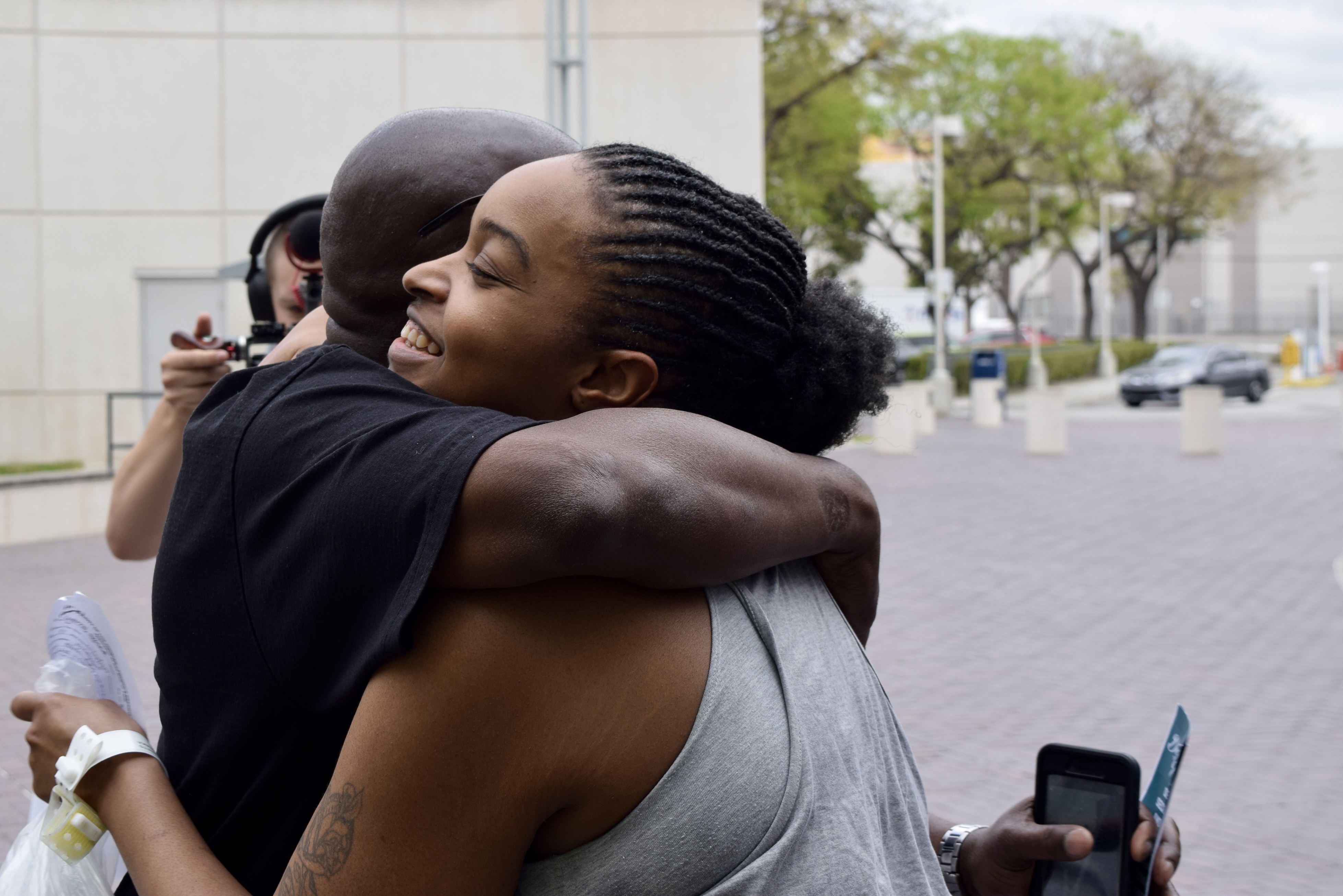
Our Justice LA Virtual Action program engages nearly 1,000 people monthly in calls, letters, and organizing, building leadership especially among formerly incarcerated people. In partnership with National Bail Out, DPN has reunited families by bailing out Black mothers before Mother's Day, highlighting that no one should be jailed simply for lacking money.
What Abolition Isn't: Clearing Up Common Misconceptions
Abolition is not about ignoring harm or violence. This might be the biggest misconception. Abolitionists take harm seriously—that's precisely why we oppose systems that perpetuate cycles of violence while doing little to heal it. Research shows that more incarceration doesn't reduce violent crime. In fact, incarceration often makes communities less safe by disrupting families, limiting economic opportunities, and traumatizing individuals who return home without adequate support. The question isn't whether to address harm, but how to do so effectively and humanely.
Abolition is not about simply emptying prisons overnight with no plan. Abolition is a deliberate, strategic process of building new structures while dismantling old ones. It requires creating robust community resources, healing-centered interventions, and accountability processes that actually work. When LA County canceled its jail expansion plans, it simultaneously committed to building alternatives to incarceration—a model of how to divest and reinvest simultaneously.
There is a difference between abolitionist reforms and reformist reforms. This is crucial. Reformist reforms add more programming and budgets to prisons, build "nicer" jails, and overall invest in structures that should not exist in the first place. JusticeLA organizers were clear when the county tried to rebrand a jail as a "mental health treatment center": "A jail is a jail is a jail," as LA County Supervisor Hilda Solis said. Abolition means not replacing jails and prisons with more jails and prisons, even if they're rebranded. It means moving away from punishment and caging as responses to social problems. Jails disappear people, not our problems—which can be solved through community-based care.
The county's 2015 plan to build a "Consolidated Correctional Treatment Facility" and relocate the women's jail 75 miles from downtown LA would have separated families, made support services inaccessible, and cost billions—all while keeping people in cages. Our coalition recognized this as jail expansion masquerading as mental health care and organized until the plans were scrapped.
Abolition is not naive about complexity. Abolitionists understand that people cause harm for complex reasons—trauma, unmet needs, systemic oppression, and yes, sometimes choice. But we also understand that caging people doesn't address these causes and often makes them worse. Nearly 40% of LA County’s 2024 budget was spent on its criminal legal system (citation). Imagine if we redirected even half of those resources toward preventing harm in the first place.
What Abolition Looks Like in Practice: Building While We Fight
Abolition work happens at multiple levels simultaneously:
Immediate decarceration and resistance: DPN's work includes fighting new jail construction, supporting people through the bail system, challenging sheriff violence, and providing direct mutual aid to system-impacted people. We've stopped LA County from building nearly 6,000 new jail beds and helped pass measures that shift hundreds of millions of dollars from incarceration to community care.
Medium-term system building: We're creating the infrastructure that makes abolition real. Our Community Care and Healing Program provides holistic wellness services. Our leadership development programs build the capacity of formerly incarcerated people to lead movements. Our organizing programs like the Justice LA Virtual Actions create spaces for collective action. The Alternatives to Incarceration work group developed concrete recommendations that the county has begun implementing.
Long-term transformation: Through campaigns like Measure J and our ongoing advocacy for closing Men's Central Jail without replacement, we're working toward a Los Angeles County where investment in community—not caging—is the default response to people's needs. We envision neighborhoods with adequate mental health services, housing for all, living-wage jobs, youth programs, and community-based responses to harm that center healing and accountability rather than punishment.
Why Abolition? The Case for Ending Mass Incarceration
The current system isn't working—not for safety, not for healing, not for justice. The facts are clear:
- Mass incarceration is expensive and ineffective. Taxpayers spend $80+ billion annually on prisons and jails. Local, state, and federal governments spend $20,000 to $50,000 per year to keep one person behind bars—money that could fund housing, education, healthcare, and community programs.
- The system is deeply racist. Black people are incarcerated at rates 10 times higher than white people for drug offenses despite using drugs at similar rates. One in three Black boys born today can expect to go to prison in his lifetime, compared to one in 17 white boys. In LA County, where African Americans are 9% of the population, they represent 30% of those in jail.
- Incarceration doesn't address root causes. Prisons are filled overwhelmingly with people struggling with poverty, mental illness, and addiction—issues that caging cannot solve. In LA County jails, 51% of people haven't even been convicted; they're simply too poor to afford bail.
- Police violence continues with impunity. Despite LA County establishing a Civilian Oversight Commission, the LA County Sheriff's Department continues to operate with minimal accountability. Deputy gangs operate within the department, and deaths in custody persist at alarming rates.
Abolition offers a different question: What if we built systems actually designed to create safety, address harm, and allow everyone to thrive?
DPN's Abolitionist Vision in Action
Since our founding in 2012, DPN has been building a Black and Brown-led abolitionist movement rooted in community power. Our work demonstrates that abolition is both visionary and practical:
We've stopped jail expansion. The JusticeLA Coalition prevented $3.5 billion in jail construction, protecting communities from further criminalization and freeing up resources for care.
We've won accountability measures. From civilian oversight to subpoena power, we've created mechanisms to challenge sheriff violence and hold law enforcement accountable.
We've redirected resources to communities. Through Measure J and related campaigns, we've secured hundreds of millions of dollars for alternatives to incarceration, youth development, housing, and community services.
We've built healing infrastructure. Our programs provide direct support—from mutual aid to healing services to leadership development—that demonstrates what community care looks like in practice.
We're led by those most impacted. Our programs center the leadership of formerly incarcerated people, their families, and communities bearing the brunt of criminalization. We're building a movement where those with lived experience lead the way forward.
Moving Forward: How to Support Abolition
Whether you're encountering these ideas for the first time or you've been organizing for years, abolition invites us all to imagine and build something better. It asks us to be both visionary and practical, to take seriously both the harm in our communities and the harm caused by our institutions.
We know another world is possible because we're building it, one victory at a time, alongside communities who have never stopped fighting for their liberation.
The question isn't whether abolition is realistic. The question is whether we can afford to keep investing in systems that have already proven they cannot deliver justice, healing, or safety.
Abolition says we deserve better, and we're going to create it together. Because we free us.